
The heart that still beats
How Edith Wharton’s The Age of Innocence showed one middle-aged woman she still has room for more
Read MoreHow to plot a thriller with Post-it notes
Novelist Sarah K. Stephens shares her secret for how to plot your novel
Read MoreIn lunch and war
Finding Horrific Inspiration at a Quaint New England Restaurant
Last summer, my wife and I spent a couple of weeks house and dog-sitting for my parents at their home in the woods of northern Connecticut near the Massachusetts border. Their town is little more than a crossroads in what’s known as the “Quiet Corner” of Connecticut. Union boasts literally only one restaurant: a quirky, charming establishment called Traveler Food and Books, just off Exit 74 on I-84.
To horror’s fearless females
To those of you who don’t already know Shirley Jackson: she is my goddess. Yes, I’ve admitted to worshipping at her figurative-altar. Yes, I’ve yipped aloud when the New Yorkerran a whole Sunday edition devoted to her awesomeness. Yes, I’ve read The Haunting of Hill Housein a single sitting, which was a mistake because by the time I finished it was 2 am and I was too terrified to sleep.
Read MoreThe monster on the moors: Wuthering Heights as horror
‘Hell is other people.’
M.P. Diedrich referenced the famous Sartre quote at our recent panel for the anthology First Came Fear. It seems fitting to utilize it once again as I make a case for Emily Brontë’s gothic masterpiece, Wuthering Heights, to sit comfortably within the horror genre. Although tales of horror can include both the fantastical and the supernatural, my own training in psychology has taught me that if humanity itself possesses the potential for infinite kindness, it just as proficiently exercises the deployment of infinite harm. And no soil more richly cultivates cruelty than that of love.
Read MoreFirst Came Fear: Horror and Terror in Literature
a panel discussion moderated by Casey Ellis,
editor of First Came Fear: New Tales of Horror
21 Oct 2018, 3 PM
The Willa Cather Room (1st Floor)
NYPL’s Jefferson Market Library
425 Avenue of the Americas, New York, NY
Behind the Yellow Wallpaper: Literature and the Psychology of Change
a panel discussion moderated by Rose Yndigoyen,
editor of Behind the Yellow Wallpaper: New Tales of Madness
20 October 2015, 7PM
Teachers College Milbank Chapel, Columbia University
Charlotte Perkins Gilman published “The Yellow Wallpaper” in 1892, exposing the realities behind the (mis)treatment of women’s mental health issues through the infamous “rest cure.” In doing so, Gilman not only opened a dialogue on the medical, social, and emotional treatment of women in society, but eventually effected change on how women’s mental health was treated. A collaboration between Behind the Yellow Wallpaper: New Tales of Madness, an anthology from New Lit Salon Press, and the Sexuality, Women, and Gender Project at Teachers College, Columbia continues the efforts set forth by Charlotte Perkins Gilman in a panel discussion titled Behind the Yellow Wallpaper: Literature and the Psychology of Change, moderated by Behind the Yellow Wallpaper editor Rose Yndigoyen. The panel will consist of select Behind the Yellow Wallpapercontributors along with artist and psychoanalyst Steven Poser from the Center for Modern Psychoanalytic Studies. The discussion will focus on how literature impacts our understanding and view of madness: its causes; treatments; compassions; and the vital role psychology plays in effecting change.
The event kicks off the Sexuality, Women, and Gender Project’s Fall Into Madness Series. Free and open to everyone. You can RSVP on Facebook. Additional information is available at swgproject.org.
Behind the Yellow Wallpaper contributors include R Crawford, Laura Hartenberger, Vivian Papp, Loreal Prystaj, and Colleen Quinn.
Behind the Yellow Wallpaper is available to buy in Paperback and eBook editions.

Rose Yndigoyen is the editor of Behind the Yellow Wallpaper: New Tales of Madness (NLSP 2014). In addition, she is a freelance writer and archivist in New York City. She has written for the websites AfterEllen and Biographile and examines queer and feminist issues in pop culture on her blog, The Ladyist. She is a co-creator and co-host of the podcast Pretty Little Recaps. Rose was a 2013 Lambda Literary fellow, and is hard at work on her first novel, a queer young adult love story. Rose lives with her wife in northern Manhattan. They are proud foster parents.
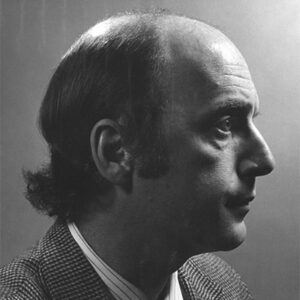
Steven Poser, Ph.D. has been practicing psychoanalysis in Greenwich Village for 20 years. He was a clinical intern at a large state mental hospital from 1994-6. Since 2001, he has been a faculty member, training analyst, supervisor, and member of the research committee at the Center for Modern Psychoanalytic Studies in New York. He has been a member of the weekly psychotherapy conference of the Department of Psychiatry, Mount Sinai Hospital since 2014. Dr. Poser is the author of The Misfit, a psychological study of Marilyn Monroe and her treatment relationship with her analyst Ralph Greenson. The book, electronically published in 2011, is a bestseller on Amazon and has been translated into two languages. He has published several psychoanalytic papers and reviews on the treatment of psychotic patients in a psychoanalytic setting and has a special interest in the phenomenology and psychoanalytic treatment of schizophrenia.

12
These posts were originally published by The Salon, the online publication of New Lit Salon Press, and are now preserved here as part of the NLSP archive at bd.
Founded in 2012 by Brian Centrone and Jordan M. Scoggins, New Lit Salon Press is a sister press of bd dedicated to creating books where words and art coexist.